Do Fake Flowers Look Tacky? How to Choose and Style Them
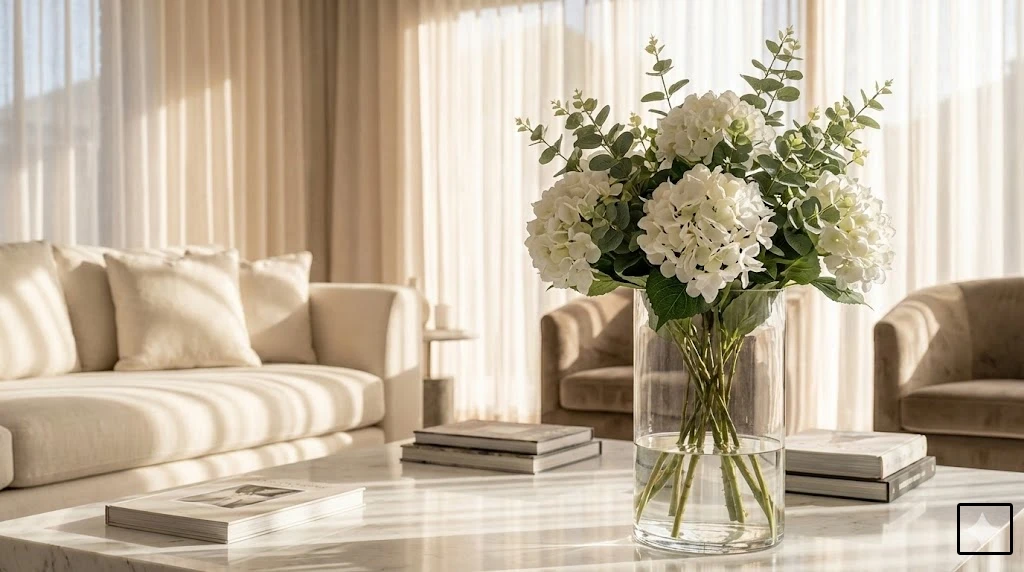
Do fake flowers look tacky? If you are picturing the shiny plastic fake flowers of the past, the answer is yes. But in 2026, the industry has undergone a revolution.
Today, interior designers aren’t looking for cheap substitutes;they are sourcing artificial real flowers—high-end botanical replicas that are indistinguishable from nature. Whether you need artificial flowers for decoration in a luxury hotel or real look fake flowers for a permanent home display, the secret isn’t if you should use them, but knowing how to distinguish quality engineering from cheap imitation.
Table of Contents
Why People Think Fake Flowers Look Tacky?
For decades, the phrase “fake flowers” conjured images of shiny, stiff, neon-colored petals gathering dust. The reason they were considered tacky goes back to the “Uncanny Valley” effect. When a fake flower is *almost* real but lacks the subtle imperfections of nature—like varying petal thickness or asymmetrical stems—the human brain instantly rejects it as “wrong.”
In the past, raw materials were of lower quality, and cheap recycled plastic was the main ingredient. The result was cheap-looking synthetic flowers with visible seams (flash) and overly bright, unnatural colors.
The Evolution of Fake Flowers: Trends & Materials
To understand the price and quality difference, we must look at the manufacturing science. The industry has shifted from decorative crafts to precision polymer engineering.
-
The Old Standard (Fabric & Glue):
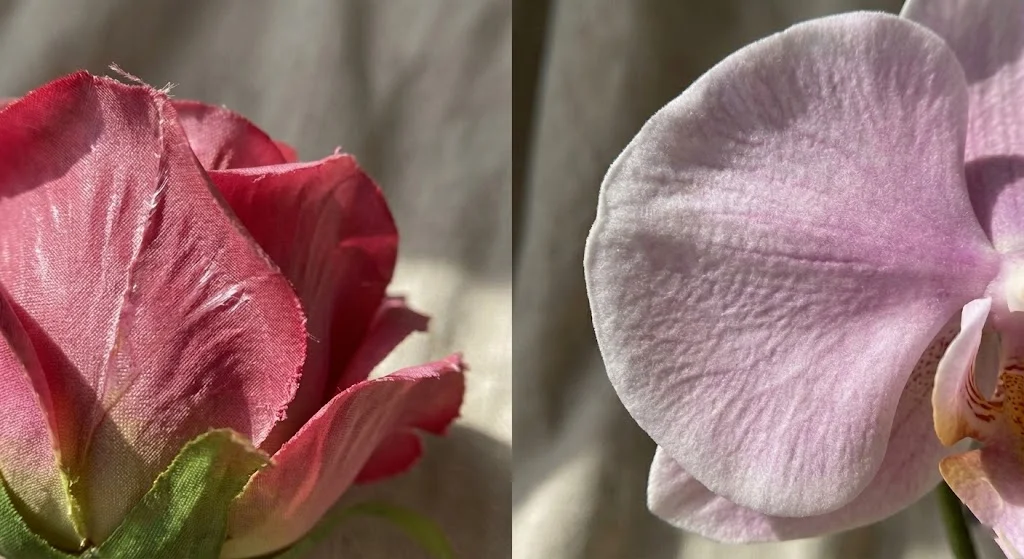
Defined by stamped polyester sheets and “dip-dyed” coloring. These products suffered from fraying edges, visible glue marks at the joints, and flat, neon pigments that faded rapidly under UV exposure.
-
The 2026 Standard (3D Bio-Mimicry):
Defined by 3D Injection Molding. We now scan live botanicals to create molds that capture microscopic textures. Utilizing Virgin PE and Latex Composites, we achieve a “Cold Touch” thermal conductivity that mimics the moisture of a real plant, eliminating the “waxy” plastic shine completely.
How to Choose Realistic Artificial Flowers?
Choosing a realistic artificial flower is simple once you know what to look for. Here are the features that separate commercial-grade products from dollar-store fakes:
1. Material of Fake Flowers That Look Real
Real-Touch (PU/Latex): The gold standard. These mimic the cool, damp feel of fresh flowers.
Virgin PE (for Greenery): Avoid recycled plastics which look waxy. Virgin PE provides a matte, organic finish.
Pro Buyer’s Tip (Safety):
For commercial spaces like hotels, ask if the material is “Fire Retardant” (FR). Premium faux florals can be treated to meet international fire safety standards (like NFPA 701).
2. Realistic Details of Modern Faux Flowers
Perform the “Node Test.” Look at the connection point where the leaf meets the stem. Cheap fakes have a visible plastic “nub.” High-end flowers have a seamless transition, often hand-wrapped to hide the joint.
3. Stem and Leaf Flexibility
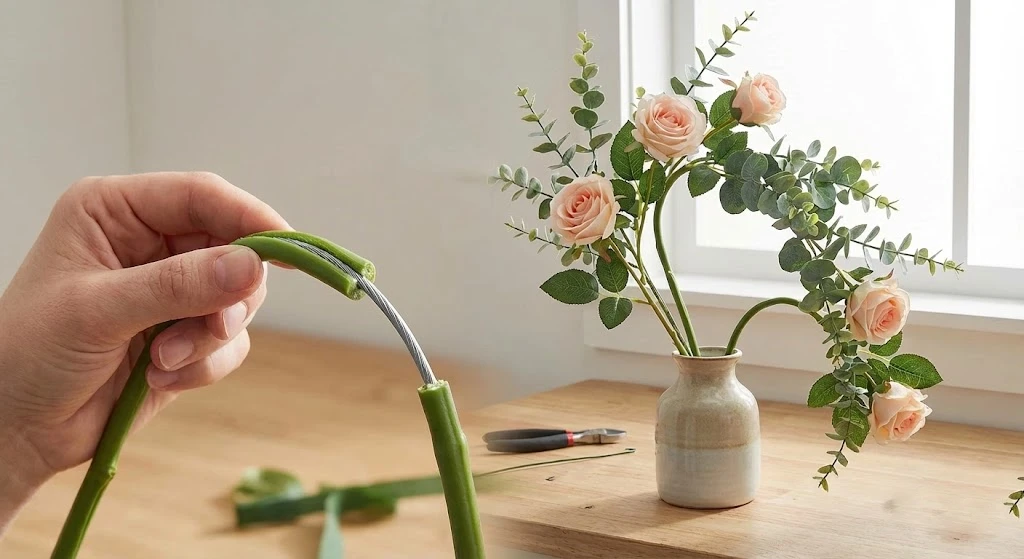
Always perform the “bend test.” Premium stems feature a wire core wrapped in textured material. They should hold the shape you create with a natural resistance, allowing you to mimic the organic droop of a real plant.
How to Make Fake Flowers Look Real?
Create a Natural Look
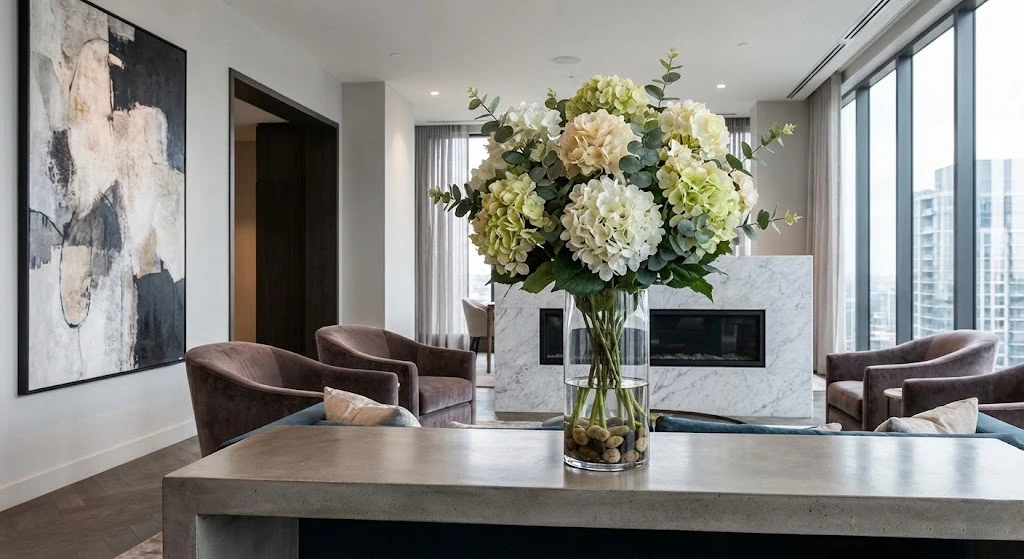
Don’t just plop the bouquet into a vase. Aggressively bend the stems. Real plants follow the sun; they twist and droop. Use wire cutters to trim stems to different lengths to avoid a “flat top” look.
Choose the Right Containers
The container can make or break the illusion. For clear glass vases, use faux water (clear epoxy resin) to hold the stems. Seeing dry stems in a clear vase immediately signals “fake.”
Placement and Lighting
Place fake flowers where you would place real ones—in natural light. Placing a “sun-loving” flower in a dark, windowless corner subconsciously signals to the brain that it is artificial.
Common Mistakes When Using Fake Flowers
- Overcrowding: Stuffing too many colors into one vase looks chaotic. Stick to a simple palette (e.g., whites and greens) for a high-end look.
- Shiny Materials: The biggest giveaway is a shiny surface. Real petals absorb light. If it shines under the store lights, leave it on the shelf.
- Ignoring Dust: Nothing screams “fake” like a layer of grey dust. Even the most expensive flower looks tacky if not cleaned.
How to Care for Artificial Flowers?
1. The Salt Method (Home):
Place small flowers in a bag with coarse salt and shake gently. The salt acts as a mild abrasive to scrub off dust.
2. The Compressed Air Method (Business):
For large artificial flowers for decoration or trees in lobbies, use compressed air to blast dust out of deep foliage.
3. UV Protection (Outdoor):
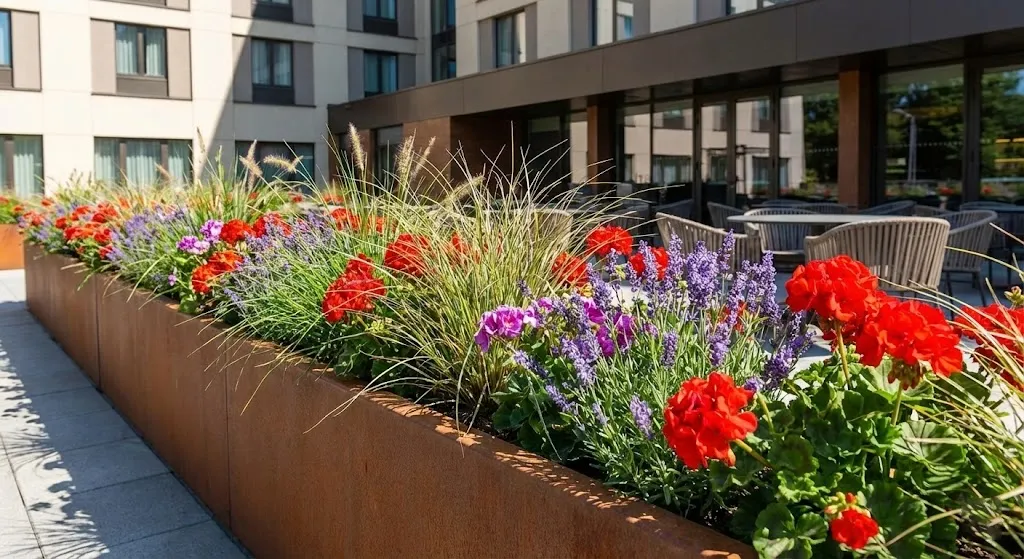
Standard silk flowers fade in direct sun. Ensure you buy products labeled “UV Resistant.” TwinkleTrees outdoor foliage is tested for 3000+ hours of UV exposure.
Why Choose Faux Flowers?
1. The “Zero-Maintenance” Advantage
Fake flowers are ideal for busy lifestyles. You aren’t expected to water, prune, or fertilize them. They retain their pristine beauty over time, making them perfect for professionals who want a sophisticated aesthetic without the daily upkeep.
2. A Smart One-Time Investment
Real flowers require constant purchasing and replacing. While we love fresh blooms, if you are on a budget or tired of investing in perishable inventory that fades in days, faux flowers are a superior financial option. You buy them once, and you are set for years.
3. Defying Nature’s Limits
For events or challenging environments, fake flowers offer a reliable solution where fresh ones fail:
- Weatherproof: Planning an outdoor wedding in a hot climate? You don’t need to worry about flowers wilting in the heat. High-end faux blooms stay perky regardless of the temperature.
- Lighting: Have a dimly lit corner or a windowless bathroom? Real plants would die, but artificial flowers allow you to add vibrant botanical beauty to any shadow-filled space.
2026 Artificial Flower Trends
As we move into 2026, the market is shifting towards specific color palettes and structural statements. Based on global search data and designer requests, here are the dominant trends defining the industry.
1. Coastal Calm: The Rise of Blue
We are seeing a massive surge in demand for blue artificial flowers. Interior designers are moving towards cool tones to create serene, water-inspired environments in hotels and spas.
Best Sellers: Artificial hydrangea flowers and Delphiniums are the top choices for achieving this breezy, coastal aesthetic.
2. Vertical Biophilia
Floor space is premium, so decor is going up. Artificial hanging flowers like Wisteria and Bougainvillea are dominating commercial ceilings and wedding arches to create immersive, cascading floral canopies.
3. Edgy Aesthetics (Dark Tones)
Moving away from traditional pastels, modern events are embracing high-contrast designs. Black artificial flowers and deep purple artificial flowers are trending for avant-garde weddings and moody restaurant interiors.
4. Seasonal Rotation
Smart businesses know that “permanent” doesn’t mean “static.” To keep commercial spaces feeling fresh, seasonal rotation is key. We are seeing high demand for artificial fall flowers (like burnt orange mums and sunflowers) to transition decor from summer to autumn.
FAQs about Fake Flowers
1. Can fake flowers be used outdoors?
Yes, but only if labeled as “UV Resistant” or “Weatherproof.” Standard silk flowers will fade. TwinkleTrees specializes in outdoor-rated foliage that withstands rain and sun.
2. Are artificial flowers out of style?
Not at all. Modern faux flowers are crafted with such realism that they are a staple in luxury design. Top interior designers use them to add permanent greenery where real plants cannot survive.
3. Are your flowers fire-safe?
Yes. We offer a specialized line of IFR (Inherently Fire Retardant) foliage. Unlike topical sprays, our fire-retardant properties are mixed into the raw materials, ensuring compliance with commercial fire codes.
TwinkleTrees Production Team
With over 15 years in artificial botany, we specialize in injection-molding technology and UV-stabilized polymers for commercial landscapes. We engineer nature for durability.